

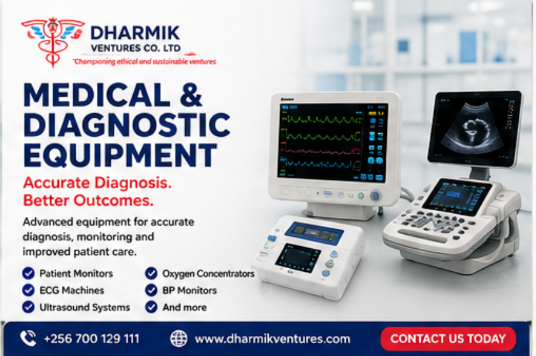
Healthcare delivery today depends heavily on accurate diagnosis. From outpatient clinics to major referral hospitals, medical and diagnostics equipment suppliers in Uganda play a critical role in ensuring doctors can detect, monitor, and treat conditions effectively.
In Uganda’s growing healthcare sector, demand for reliable diagnostic tools such as ultrasound scanners, X-ray machines, patient monitors, and laboratory analyzers continues to rise. Hospitals are no longer just looking for equipment—they are looking for long-term partners who can provide quality, maintenance, and technical support.
Dharmik Ventures Ltd is one of the trusted suppliers supporting hospitals, clinics, NGOs, and diagnostic centers across Uganda with modern medical and diagnostic solutions designed for both urban hospitals and rural healthcare environments.
Why Medical and Diagnostics Equipment Matters in Healthcare : Medical and diagnostics equipment suppliers in Uganda
Diagnostics are the foundation of effective treatment. Without proper equipment, even the best medical professionals are limited in what they can achieve.
Here’s why diagnostic equipment is essential:
- Early disease detection — Conditions like cancer, infections, and internal injuries can only be properly identified using imaging and lab equipment.
- Accurate treatment decisions — Doctors rely on diagnostic results to prescribe correct treatment plans.
- Improved patient outcomes — Faster diagnosis means faster treatment and better recovery rates.
- Reduced referral delays — On-site diagnostics reduce the need to send patients to distant facilities.
- Efficient hospital operations — Modern machines speed up testing and reporting processes.
In Uganda, where patient volumes are high and resources can be limited, reliable diagnostic systems significantly improve healthcare delivery.
Core Medical and Diagnostics Equipment Used in Uganda
Hospitals and clinics require a wide range of diagnostic tools depending on their size and specialization. Below is a breakdown of the most commonly used equipment.
1. Imaging Equipment
Imaging plays a central role in diagnosis.
- Ultrasound Machines — Used in maternity wards, abdominal scanning, and soft tissue examination.
- X-ray Machines — Essential for detecting fractures, chest infections, and internal conditions.
- Portable Imaging Devices — Increasingly used in emergency and rural outreach settings.
These systems help clinicians visualize internal structures without invasive procedures.
2. Patient Monitoring Systems
Monitoring equipment is vital in wards, ICUs, and emergency units.
- Multiparameter patient monitors
- ECG machines for heart activity tracking
- Pulse oximeters for oxygen level measurement
- Blood pressure monitoring systems
These devices ensure continuous observation of critical patients and immediate response in emergencies.
3. Laboratory Diagnostic Equipment
Laboratory systems support disease detection at a microscopic level.
- Hematology analyzers
- Biochemistry analyzers
- Microscopes (digital and optical)
- Centrifuges
- Urinalysis systems
These tools are essential for confirming infections, organ function, and blood-related conditions.
4. Point-of-Care Testing Devices
These compact devices are widely used in clinics and emergency settings.
- Glucometers for diabetes monitoring
- Rapid test kits (malaria, pregnancy, HIV screening)
- Portable blood analyzers
They provide quick results, especially in settings where full laboratory access is limited.
5. Diagnostic Accessories & Consumables
Reliable diagnostics also depend on supporting materials:
- Test tubes and sample containers
- Reagents and chemical kits
- ECG electrodes and leads
- Ultrasound gels and probes
Without these, even advanced machines cannot function properly.
Key Factors to Consider When Buying Diagnostic Equipment in Uganda
Choosing the right supplier is just as important as choosing the equipment itself.
1. Equipment Reliability and Accuracy
Diagnostic results must be precise. Low-quality machines can lead to misdiagnosis and poor treatment outcomes.
2. After-Sales Support
Medical equipment requires servicing, calibration, and occasional repairs. Always choose suppliers who provide local technical support.
3. Availability of Spare Parts
Equipment downtime in hospitals can be dangerous. Ensure replacement parts are readily available in Uganda.
4. Training and Installation
Proper setup and staff training ensure that equipment is used correctly and safely.
5. Budget vs Long-Term Value
Cheaper equipment may lead to higher maintenance costs. Focus on long-term efficiency and durability.
Common Mistakes Hospitals Make When Purchasing Diagnostic Equipment
Many healthcare facilities in Uganda face challenges due to poor procurement decisions:
- Buying equipment without checking calibration standards
- Choosing suppliers without local technical teams
- Ignoring training requirements for staff
- Purchasing outdated or incompatible systems
- Focusing only on price instead of lifecycle value
Avoiding these mistakes can significantly improve hospital efficiency and patient care outcomes.
Benefits of Working with a Trusted Supplier
Partnering with an experienced supplier ensures more than just equipment delivery.
With a reliable provider like Dharmik Ventures Ltd, healthcare facilities benefit from:
- Access to modern diagnostic technology
- Professional installation and setup
- Technical support and maintenance services
- Bulk supply for hospital expansions
- Guidance on equipment selection based on clinical needs
This ensures hospitals invest in equipment that truly supports patient care.
Frequently Asked Questions (FAQs)
Where can I buy medical and diagnostic equipment in Uganda?
You can purchase quality diagnostic equipment from trusted suppliers in Kampala, including ultrasound machines, X-ray systems, and lab analyzers from established providers.
Do you supply diagnostic equipment outside Kampala?
Yes. Equipment can be delivered and installed across Uganda, including upcountry hospitals and clinics.
What is the most important diagnostic equipment for a clinic?
For small clinics, ultrasound machines, patient monitors, and basic lab analyzers are essential starting points.
Do you provide installation and training?
Yes. Proper installation and staff training are key parts of diagnostic equipment supply to ensure correct usage.
Build a Stronger Diagnostic Department Today
Investing in the right medical and diagnostics equipment is one of the most important decisions any healthcare facility can make. It directly impacts diagnosis speed, treatment accuracy, and patient survival rates.
Whether you are setting up a new clinic or upgrading an existing hospital, working with a reliable supplier ensures long-term success.
📞 WhatsApp/Call: +256 749-041-335
✉️ Email: info@dharmikventuresltd.com